
What Does a Game Version Number Tell Rajbet Players About an Update?
Introduction
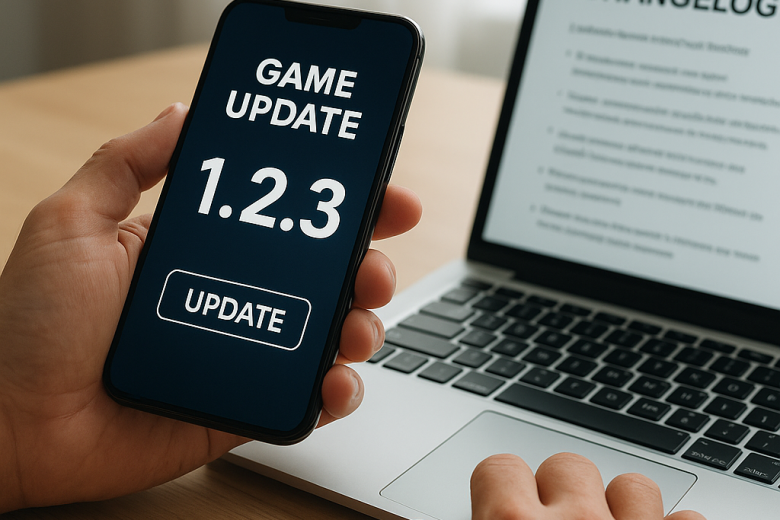
A game version number is a short label for a changing piece of software. For Rajbet players, it can offer an early clue about whether an update is routine or substantial, but it cannot tell the whole story.
The meaning depends on how the developer or distributor labels releases. A familiar format such as major.minor.patch is a convention, not a universal rule. Some products use build identifiers, dates or other systems.
Treat the version number as a signpost, not a verdict. It can help frame questions about a release, while release notes, in-game notices and the game’s behaviour provide the answers.
Analysis: the players and the platform
A team sheet in a sports contest offers an outline, not the full tactical plan. A version number works in much the same way: it identifies a software release but does not reveal every change it contains.
Players see one side of an update. They may notice a changed menu, different controls, a new feature or a problem that has disappeared. The platform or game provider assigns the release label and may publish notes about the intended changes. These perspectives are related, but they are not interchangeable.
For Rajbet players, the key is not to assume too much from the number. A higher version does not automatically mean more content, better performance or a complete redesign. It may reflect a small fix, a compatibility adjustment, a change to a component players rarely see, or simply a new build under the provider’s numbering system.
A version label also does not show whether every player received the update at the same time. Releases may be distributed in stages, and information can vary across devices and providers. Without a clear notice from the relevant source, the number alone cannot confirm timing or availability.
Key factors
The first factor is the numbering convention. In a three-part system, the first figure often marks a major release, the second a smaller feature update, and the third a patch or correction. This is a useful guide, not a guarantee: developers may define the parts differently, skip numbers or change their system.
A change from 2.4.1 to 2.4.2 might suggest a limited patch, while a change to 3.0.0 may point to a more significant release. Neither is proof. A provider may use a major number for internal reasons, and a small increment can still accompany an important change.
The second factor is the release note. It is the best place to check whether an update concerns features, the interface, stability, compatibility or bug fixes. Notes may be brief and omit technical details, but they offer more information than the version number alone.
The third factor is where the number appears. A version shown inside a game may identify that game’s release, while the surrounding application or platform has its own version. Confusing the two can make it seem as though the game has changed when only the platform has been updated—or cause players to miss a separate game update.
Finally, consider what players can observe. A new version label confirms that a release has been recorded, but it does not prove that a feature will work better for everyone. Devices, operating systems, connections and local settings can all affect the experience. A version number cannot diagnose those conditions.
Scenario: reading an update as it arrives
Imagine a Rajbet player opens a game and sees its version change from 1.8.6 to 1.8.7. The safest conclusion is that a new release has been recorded. Under a familiar numbering convention, the final digit may suggest a small patch, but it does not reveal whether the change was visual, technical or intended to fix a specific issue.
The player checks the available update information. If it mentions a correction or stability adjustment, that gives a clearer account of the release. If no explanation is provided, the details remain unknown. The number alone does not prove that a feature was added or repaired.
Now imagine the version changes from 1.8.7 to 2.0.0. The larger jump may prompt the player to look for changes to the interface, functionality or compatibility. But it cannot confirm that any of these changed. Release information and direct observation are needed to establish the update’s scope and impact.
Match analysis offers a useful discipline here: separate what is visible from what is inferred. A scoreline records an outcome, but not every reason behind it. Similarly, a version number identifies a release without explaining it fully. The comparison is about how to assess evidence, not an equivalence between a software update and a sporting result.
Conclusion
For Rajbet players, a game version number is best treated as a first signal. Its pattern may suggest whether an update is small or substantial, especially when the publisher uses a familiar convention. But numbering systems vary, and the number does not describe the changes by itself.
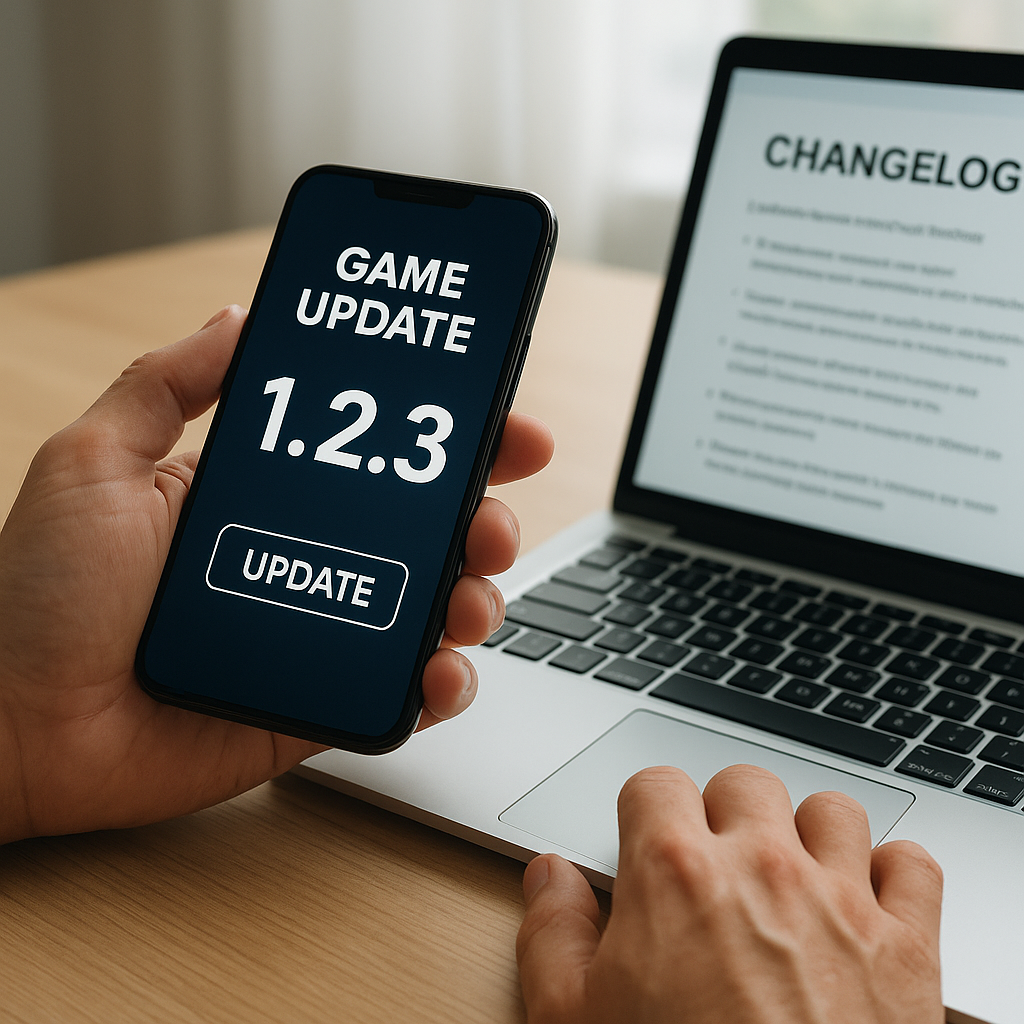
Read it alongside release notes and the game’s actual behaviour. Keep the game version separate from the version of the surrounding platform, and do not treat a higher number as proof of new features or better performance. The number shows where a release sits in a sequence; the evidence around it explains what the update means.