
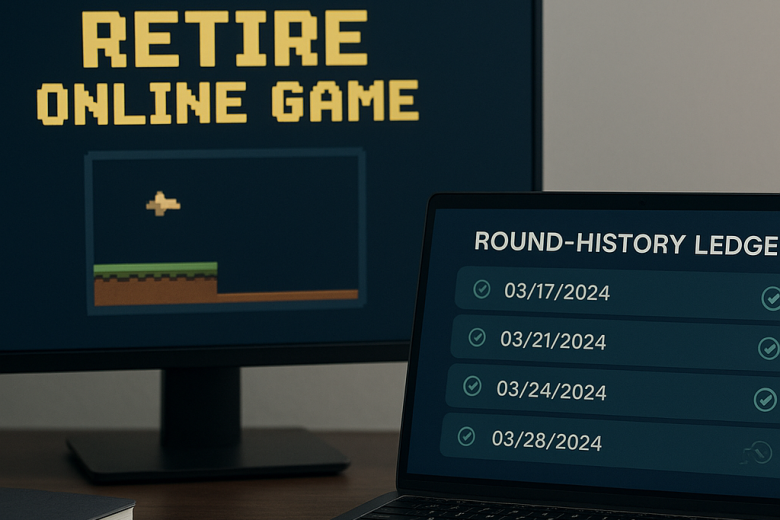
Retired Games at Rajbet: What Happens to Historical Round Records?
Introduction
When a game leaves a platform’s active catalogue, its history may become harder to find—but that does not mean it has disappeared. For anyone reviewing a past result through Rajbet Login, it is important to distinguish a game’s current availability from the status of its round records.
A title may be removed from the lobby while its records remain in an account history. Or it may no longer be accessible through ordinary navigation, even if some transaction details are stored elsewhere. Without a published, game-specific policy, neither outcome should be assumed.
Historical records can help users reconcile activity, understand a displayed result and distinguish a completed round from an interrupted session. But visibility, retention and independent verification are separate matters. The platform’s interface may address only the first.
Analysis of players and records
There are no teams or named players to assess here. The relevant parties are the user reviewing an account, the platform displaying its history and the game provider whose software may have generated the round. Each has a different relationship to the record.
An account history is often the most immediate reference point. It can link an entry to a time, game title or balance movement, but it may not provide a complete replay of the round. It might show the outcome and related account activity without preserving the screens, animations or other game data displayed at the time.
When a title is retired, a platform may continue to show past activity in the general account history even though the game is no longer available. Alternatively, the old game page may disappear while relevant entries remain accessible elsewhere in the account. These are possible design choices, not confirmation of Rajbet’s retention practices.
Records can also exist in different forms. A round outcome, a balance transaction and a session log are not necessarily the same record, and they may have different retention periods or access routes. Seeing one does not prove that every underlying detail is available—or that it has been erased.
To assess a record, ask whether the entry can still be found, whether it clearly identifies the game and round, and whether the result matches the surrounding account activity. Without those details, the record may be difficult to interpret even if some information is stored.
Key factors
Retirement is not deletion. A game can stop accepting new sessions without its past activity being removed. Its catalogue status shows whether it is currently available; it does not establish what happens to historical data.
Display is not retention. A record missing from the standard history view may be hidden by the interface, filtered by date or unavailable through that particular route. Likewise, a visible summary does not prove that all supporting data can still be retrieved.
Identification determines usefulness. A result is difficult to assess if it cannot be linked to a game or specific round. Clear identifiers and consistent timestamps help, but do not independently prove the underlying result is accurate.
Verification has limits. A platform’s history can show what its account system recorded, but it may not provide a complete technical audit trail. A readable account entry is not the same as independent confirmation.
Privacy and access rules matter. Historical records may include both account information and game activity. Retention periods, visible details and request options depend on platform rules and applicable requirements. Check the relevant terms rather than assuming a universal retention period or right of access.
Interface changes can obscure continuity. A game may be renamed, replaced or removed, while older entries retain a title that is no longer searchable. The record may still exist; the link between its old label and the current interface may simply be unclear.
Scenario: a retired title and an old round
Imagine a user returning to an account and finding that a game they played is no longer listed. They remember a round but cannot find it through the catalogue. That alone does not show whether the round’s account record still exists.
Finding the game and finding the transaction are different tasks. The general activity history might show a dated entry with the game name and result, even if the game-specific history page is gone. Or the account may show only a broader balance movement, without clear round-level details.
If an entry appears, the user can check whether it identifies the round or session, gives a time reference and shows the related account movement. If those details do not align, the record may need clarification. The game’s retirement alone is not enough to conclude that the result was lost, altered or disputed.
If no entry appears, there may be several explanations: a limited date range, a changed menu or a record that is not shown in the standard interface. The only firm conclusion is that the information is not visible through that route—not that it has definitely been deleted or can certainly be recovered.
The platform’s procedures are key. A clear policy can explain what historical information is kept and how users can review it. Without one, outside observers cannot promise a particular outcome. It is equally unwarranted to claim that retirement automatically preserves every detail or erases all past records.
Conclusion
A game’s removal from the catalogue shows that it is no longer available to play; it does not prove what happened to its history. Round records may remain visible, be available in another form or no longer appear in the standard interface. The answer depends on the platform’s systems and policies.
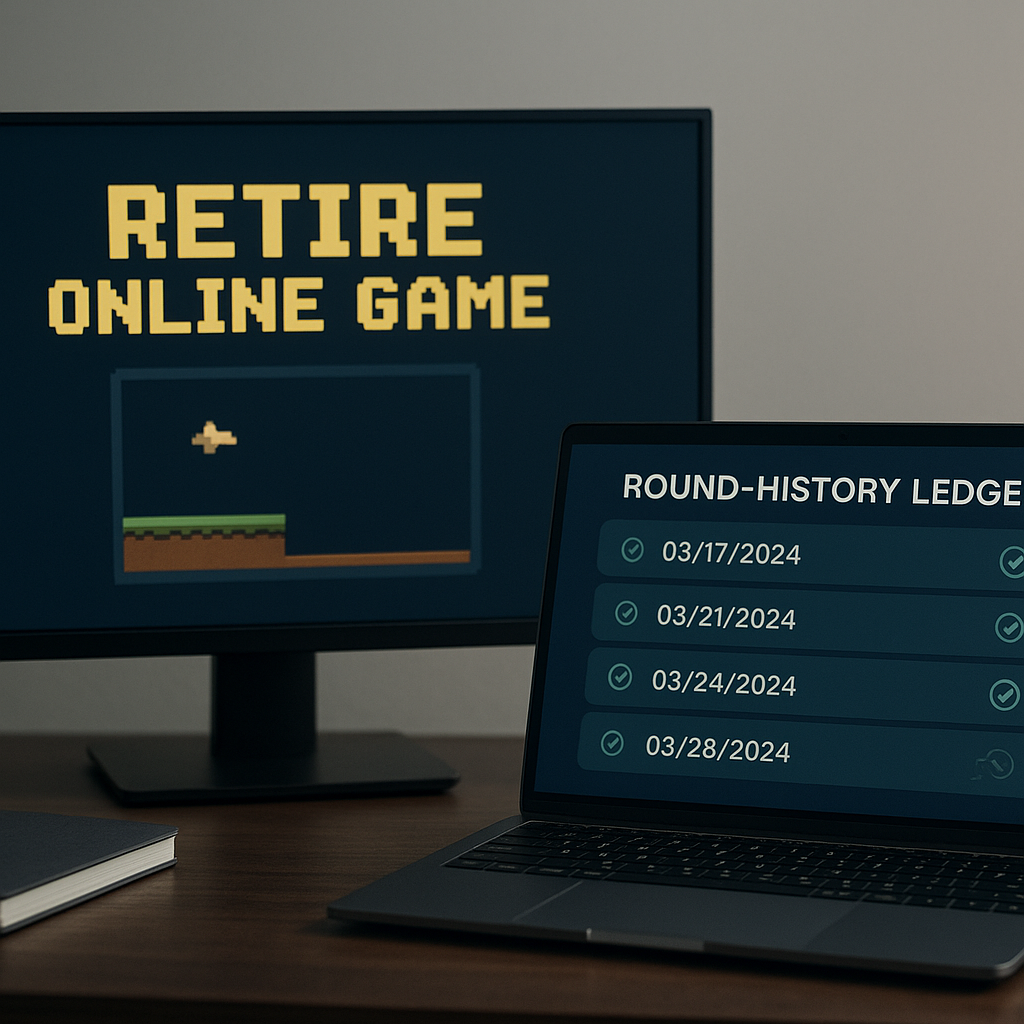
To assess the issue, separate three questions: can the game still be played, is a round-level record retained, and can that record be verified? This avoids both false reassurance and unwarranted suspicion. Without a specific policy or accessible record, the honest answer is that retirement alone does not reveal what happened to the data.