
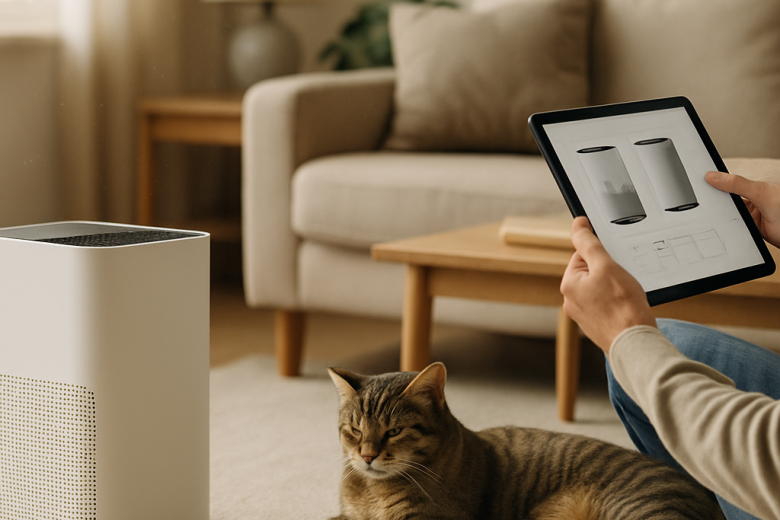
How to Compare Air Purifiers for Allergies, Pets, and Everyday Dust
Introduction
Choosing an air purifier is less about finding the model with the longest feature list and more about matching it to your needs. A home with seasonal pollen, a shedding dog, and everyday dust may call for a different balance of filtration, airflow, and maintenance than a small bedroom where quiet operation is the priority. Air purifiers work best when their features suit the room and the people using them.
Start with three questions: What do you want to remove from the air? How large is the space? Will you run the purifier often enough to make a difference? Marketing claims can blur these distinctions. Focus instead on filter type, CADR, room size, noise, and the cost of replacement filters when comparing air purifiers.
Analysis of the contenders
Different purifier designs suit different needs. A mechanical purifier with HEPA filtration is a versatile choice for airborne particles such as pollen, dust, and pet dander, provided it moves enough air for the room. Many air purifiers use this approach to capture particles.
Not every product labelled HEPA performs equally well. Check the filter standard and the purifier’s clean-air performance rather than relying on a filtration claim alone. A highly efficient filter in an undersized or rarely used unit may be less effective in practice than a well-matched purifier that runs regularly. This is why air purifiers should be assessed as complete systems, not by filter claims alone.
Some models add activated carbon to reduce odors and certain gases. This is separate from particle removal: HEPA filtration cannot replace a substantial carbon stage, and a thin carbon-coated sheet may have limited capacity. If cooking smells, smoke, or litter-box odors are your main concern, check how much carbon the purifier contains and how often it needs replacing. Among air purifiers, carbon capacity can vary considerably.
A compact, lower-cost purifier may suit a small office or bedroom, but its limited airflow can be a drawback in a large living area. A high-capacity model can clean air faster, but its size, noise, and filter costs may make it a poor choice if you’re likely to switch it off. Compare air purifiers on performance at the settings you’ll actually use.
Key factors
Start with the room, not the appliance. A stated room-size rating is useful only if the manufacturer explains its assumptions, including ceiling height and air changes per hour. Open-plan layouts, high ceilings, and air moving between rooms can all make the coverage figure seem more generous than it is in practice. For air purifiers, realistic room coverage matters more than an impressive headline figure.
The CADR rating shows how quickly a purifier delivers filtered air. Ratings may be listed for smoke, dust, and pollen, so compare the figure relevant to your needs rather than treating one number as a universal score. A higher CADR generally means faster cleaning in a given space, but may also mean more noise and energy use at full power. This helps make comparisons between air purifiers more meaningful.
For allergies, focus on particle capture and consistent use. Pollen and other allergens can enter through open windows or on clothing. A purifier can reduce airborne particles, but it won’t remove allergens that have settled on bedding, carpets, or furniture. Cleaning regularly and keeping windows closed during high-pollen periods can also help. Air purifiers are one useful part of an allergy-control routine.
Pet owners face two issues: dander can remain airborne, while fur tends to collect on surfaces or clog the pre-filter. A washable or easy-to-clean pre-filter can catch larger debris and protect the main filter, but you’ll still need to vacuum and groom your pets. Controlling odors may also require a carbon stage, which works separately from particle filtration. Some air purifiers make pre-filter cleaning especially straightforward.
Everyday dust is a mix of particles: some stay suspended, while others settle quickly and are better handled by regular cleaning. An air purifier is one part of a household routine, not a replacement for dusting, vacuuming, or addressing the source of persistent dust. Air purifiers can help with airborne dust when sized and maintained appropriately.
Noise should also factor into your decision. Manufacturers often list sound levels for different fan settings, but the quietest setting may deliver far less clean air than the headline rating suggests. Check whether the purifier can run at a useful speed in the room where you sleep or work. A powerful unit that’s regularly switched off won’t help much.
Before buying, calculate the upkeep costs. Check replacement-filter prices and lifespan, whether the pre-filter can be cleaned, and whether the purifier indicates when a filter needs changing. A clear filter replacement schedule can make ongoing maintenance easier to plan. A clogged filter can restrict airflow, while replacing one too early adds expense without necessarily improving performance.
Match scenario
Consider three rooms with different needs. For a pollen-sensitive bedroom, choose a purifier sized for the space, with effective particle filtration and a low enough noise level to run overnight. A sleep mode is useful only if it still delivers adequate airflow; a dim display alone won’t clean the air.
In a living room shared with a shedding pet, look for a CADR suited to the room, an accessible pre-filter, and a manageable cleaning routine. If odors are also a concern, assess the carbon stage separately. Place the purifier where air can circulate freely; putting it behind a sofa or beside heavy curtains can limit its reach. Air purifiers need clear space around their air intakes and outlets.
For a smaller room where everyday dust is the main concern, a compact unit may be enough if its room-size guidance matches the space. If dust returns quickly, check other possible sources, such as carpets, bedding, open windows, or renovation work. In each case, the best purifier isn’t necessarily the most expensive or powerful. It’s the one that fits the room and can be maintained and used consistently.
Conclusion
Comparing air purifiers is easier when you match your needs to a machine’s measurable strengths. HEPA filtration helps capture particles, CADR indicates airflow, and room size puts both in context. Noise, carbon capacity, and filter costs determine how well those advantages hold up in daily use.
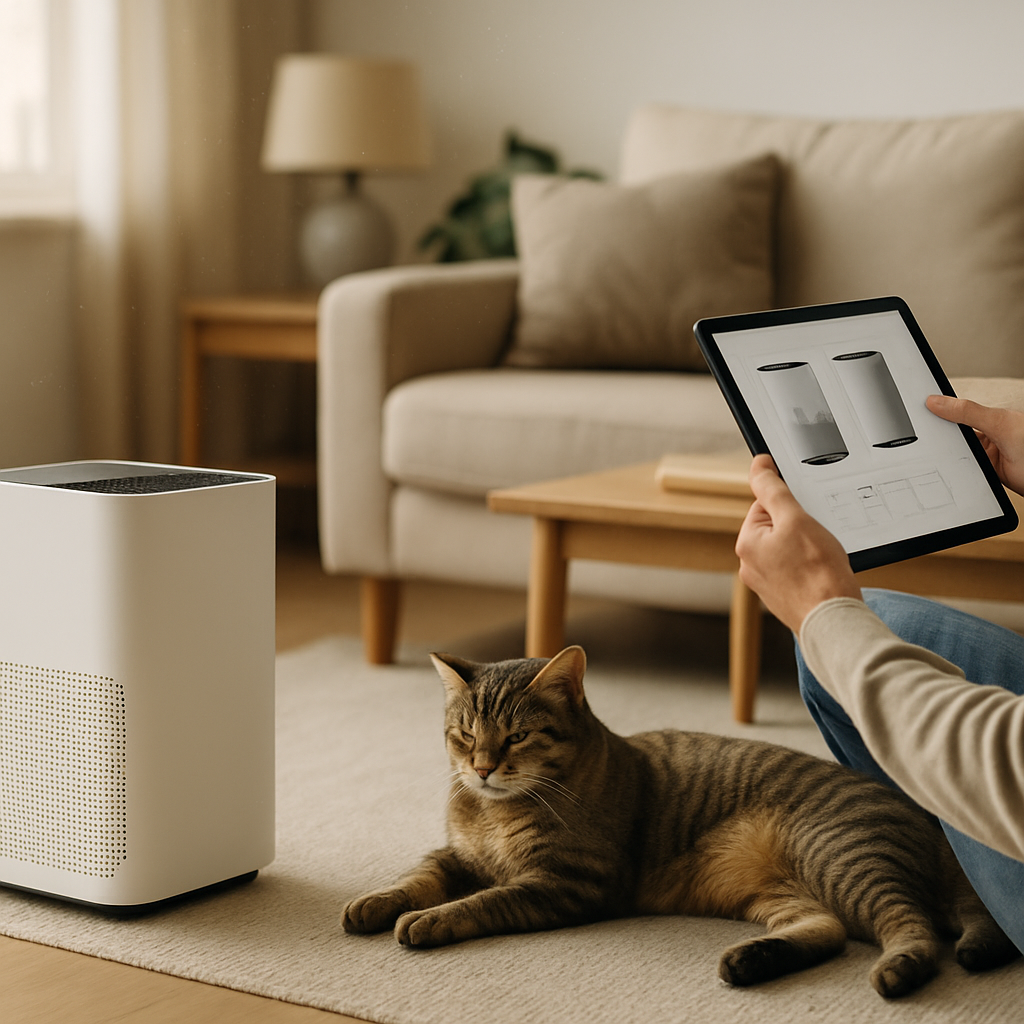
No single specification settles the choice for allergies, pets, and dust. Focus on your main concern, check the evidence behind performance claims, and remember what a purifier can’t do. A well-chosen unit can reduce airborne particles, but works best as part of a broader approach to cleaner indoor air.