
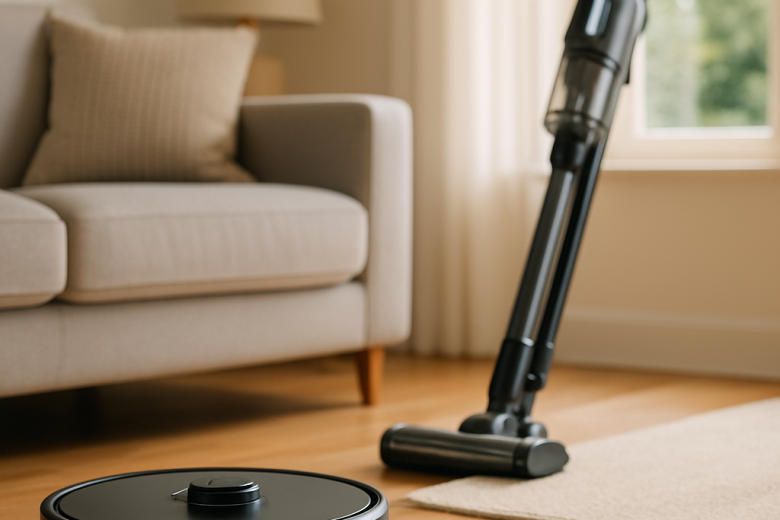
Robot Vacuum vs. Cordless Stick Vacuum: Which Is Better for Your Home?
Introduction
Choosing between a robot vacuum and a cordless stick vacuum comes down to how you want to clean: automatically, in the background, or on demand, with hands-on control.
A robot vacuum can clean the same rooms regularly with little supervision. A cordless stick vacuum is easier to direct at spills, stairs and awkward corners that routine cleaning may miss.
Neither is right for every home. The best choice depends on your floors, furniture, pets and cleaning habits—especially whether you’re more likely to clean regularly with a machine that works on its own or one you use by hand. For many households, a robot vacuum can make household cleaning more consistent.
Analysis of the contenders
A robot vacuum is designed for regular cleaning. It follows a schedule, navigates rooms and picks up everyday dust and debris while you get on with other things. Its main advantage is consistency: frequent, light cleans can keep grit and hair from building up.
Robots work best in open, uncluttered spaces. Mapping and obstacle detection help, but cables, toys, low furniture and narrow transitions can still cause problems. If the vacuum gets stuck or misses areas, it may need more attention than expected. A robot vacuum is most effective when rooms are prepared for its route.
A cordless stick vacuum is a versatile option for messes that need attention right away. Depending on its attachments, it can clean floors, upholstery, stairs and other hard-to-reach surfaces. That makes it useful for spills and targeted jobs.
But it relies on someone to do the cleaning. Even a lightweight model needs to be taken out, pushed around and put away, and its runtime is limited by battery life. If you put off vacuuming, its cleaning power won’t help keep the floors clear.
Key factors
Cleaning performance. Both types can handle routine dust, crumbs and surface debris. Results depend on the brush, suction, navigation and cleaning frequency. A robot covers floors regularly; a stick vacuum lets you focus on areas with more dirt.
Suction claims alone don’t tell the whole story. A robot may pass over a busy area repeatedly but still struggle with debris in a deep rug. A stick vacuum offers more control over direction and pressure, though a rushed pass may still leave dirt behind.
Pet hair. Hair collects along edges, under furniture and around brush rolls. A robot can help keep up with shedding between deeper cleans, especially on open hard floors, but its bin may fill quickly and its brush may need frequent cleaning.
A cordless stick vacuum is often better for concentrated patches of hair, stairs, sofas and upholstery, if it has the right attachments. In homes with heavy shedding, using a robot for daily upkeep and a stick vacuum for occasional detail work may be more practical than relying on one machine. A robot vacuum can help limit the buildup between those deeper sessions.
Floor types and layout. Robots generally do well on hard floors and low-pile rugs, provided they can cross thresholds and avoid obstacles. Thick rugs, fringe, tight gaps and multiple levels can limit where they go.
A cordless stick vacuum works in spaces that may be difficult for a robot. You can carry it between floors and use it on different surfaces, though changing settings or attachments takes time. Robots suit compact, open-plan homes; stick vacuums are more practical in multi-storey or cluttered homes.
Maintenance and ownership. Both require regular care. A robot’s bin needs emptying, its brushes clearing and its sensors cleaning. A self-emptying dock reduces one chore but takes up space and also needs maintenance.
A stick vacuum’s bin, filters and brush roll also need attention. Its battery wears over time, and the vacuum needs to be charged. The difference is when the work happens: a robot needs ongoing care, while a stick vacuum adds effort during each cleaning session. Consider these tasks when deciding whether a robot vacuum fits your routine.
Time and household habits. A robot is most useful when it can follow a schedule and rooms are clear enough for it to move around. It helps make cleaning more consistent, but you’ll still need to tidy the floors and clean areas it can’t reach.
A cordless stick vacuum suits people who prefer quick, focused cleaning. It’s handy for spilled cereal or a muddy entryway, as long as it’s charged and easy to access. Storage, weight and battery life all affect how often you’ll use it.
Match scenario
Imagine two homes on a busy weekday. In the first, the rooms are open, the floors are hard or low-pile, and dust and pet hair build up gradually. A robot vacuum is a good fit: it can clean often, manage everyday debris and reduce the need for full-floor sessions.
In the second, there are stairs, mixed flooring, toys on the floor and frequent spills. A cordless stick vacuum is more practical. You can carry it where it’s needed, redirect it quickly and use it on more than just the floors. A robot’s route would likely be interrupted.
For heavier messes—after a gathering, renovation or week without cleaning—a robot is unlikely to replace a thorough manual clean. A stick vacuum is better for concentrated messes, though a large home or very dirty floors may call for a full-sized vacuum.
Many households can use both: let the robot handle regular floor cleaning and save the stick vacuum for stairs, edges, upholstery and urgent messes. If you’re buying just one, choose the machine that suits the jobs you face most often.
Conclusion
A robot vacuum is best for regular, low-effort cleaning in a home it can navigate. A cordless stick vacuum offers more flexibility and control across different spaces and surfaces.
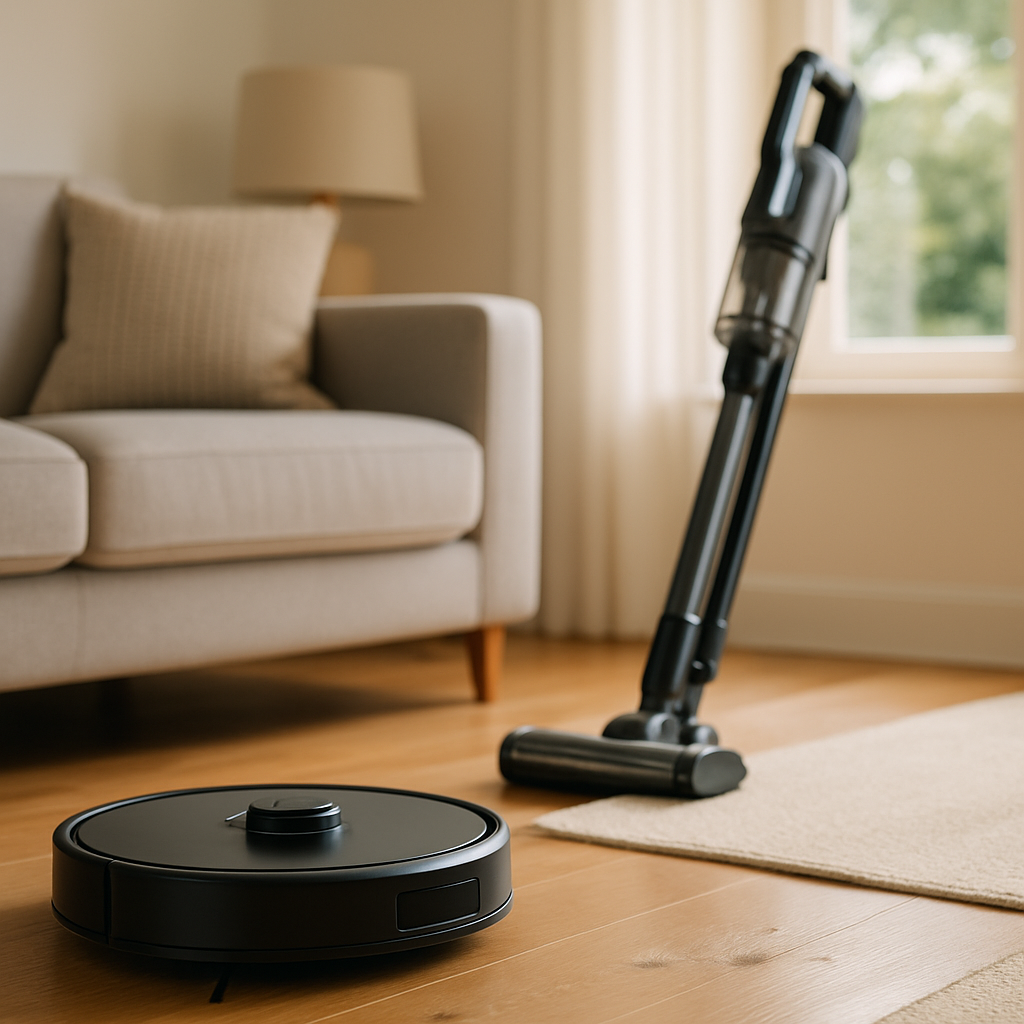
Choose a robot if consistency is your main challenge; choose a stick vacuum if access and versatility matter more. The right choice depends on your home’s layout and your cleaning habits.