
How to Find Effective Sunscreen for Sensitive Skin Without Overspending
Introduction
Shopping for sunscreen can feel like the most expensive bottle has a head start. But when choosing sunscreen for sensitive skin, the real test is simpler: does it protect well, feel comfortable and cost little enough to use regularly?
A sunscreen that stings, feels unpleasant or strains your budget is a poor choice, no matter how impressive the packaging. You don’t need a universally perfect formula. You need a dependable sunscreen for sensitive skin, chosen by checking what matters rather than paying extra for claims you may not need.
Start with broad-spectrum SPF 30 or higher, then consider the sunscreen ingredients and how the formula feels. The label is only the first step. Comfort, coverage and consistent use determine whether a sunscreen works in real life.
Analysis of the contenders
Sunscreens generally fall into two groups: mineral formulas, which use zinc oxide, titanium dioxide or both, and formulas that use other UV filters. Neither group is right for everyone with sensitive skin. Reactions vary, and “mineral” does not guarantee that a product won’t irritate you. When comparing sunscreen for sensitive skin, consider both the UV filters and the full formula.
Mineral sunscreen may be a good starting point if you’ve reacted to other formulas or prefer to avoid certain filters. However, it can leave a visible cast, feel thick or be difficult to spread, especially on deeper skin tones. If the finish leads you to apply too little or skip the product, its potential benefits are lost. The best mineral sunscreen for sensitive skin is one you can comfortably apply in the recommended amount.
Other UV filters can make for lighter formulas with less visible residue, but they may still sting some people. A reaction could be caused by an active filter, fragrance, preservatives or the overall formulation. Sensitive skin varies from person to person, and a long ingredient list alone won’t identify the cause. For sunscreen for sensitive skin, pay attention to your own history of reactions rather than assuming one type works for everyone.
Read the full label instead of relying on claims on the front of the package. Fragrance-free skincare can be a useful starting point if fragrance is a known trigger, but it is not allergy-proof. Words like “gentle” and “clean” are no substitute for checking the ingredients and seeing how the product feels on your skin. These are practical beauty shopping tips for anyone comparing sunscreen for sensitive skin.
Key factors
Separate protection claims from cosmetic promises. SPF primarily measures protection against UVB rays, while a broad-spectrum label indicates protection against both UVA and UVB. Higher SPF can offer more protection, but you still need to apply enough and reapply as directed. For sunscreen for sensitive skin, look for clear protection information alongside a formula you can tolerate.
If you’ll be swimming or sweating, choose a water-resistant formula and follow the duration stated on the label. For everyday use, apply generously to exposed skin; many people use less than they need to get the labeled protection. Reapply about every two hours outdoors, and sooner after swimming, sweating or toweling off, following the product directions.
Use the ingredient list as a practical checklist, not a scorecard. If a product repeatedly causes burning, itching or a rash, stop using it. Consider seeing a dermatologist, especially if the reaction is persistent or severe. A small patch test may reveal an obvious problem, but it can’t guarantee that the product won’t irritate your face or cause a reaction in the sun. Reviewing sunscreen ingredients can help you make a more informed choice, though it cannot predict every reaction.
Texture matters as much as the label. A sunscreen that spreads easily and doesn’t sting around the eyes may be more useful than one that seems ideal on paper but is uncomfortable to wear. For sunscreen for sensitive skin, judge the finish on your own face. For your body, a larger, simpler bottle may make regular use more affordable.
Compare prices by ounce or milliliter, not just by the sticker price. A small premium product may cost much more per use than a larger, basic formula with the same relevant protection. But the cheapest bottle isn’t a bargain if you dislike it and don’t apply enough. This simple comparison is one of the most useful beauty shopping tips when you need sunscreen for sensitive skin.
Good shopping often means ignoring distractions. Don’t pay more just for a fashionable ingredient, luxury packaging or broad skincare claims when your main need is reliable sun protection. Compare the size, SPF, broad-spectrum label, water-resistance claim and likely comfort. Then consider whether the price makes regular use realistic.
If a sunscreen protects well and suits your skin, there’s no need to replace it just because a newer product has arrived. When comparing options for sunscreen for sensitive skin, change one thing at a time if possible. That makes it easier to tell whether a reaction is linked to a different filter, fragrance or texture, rather than several new products introduced at once.
Match scenario
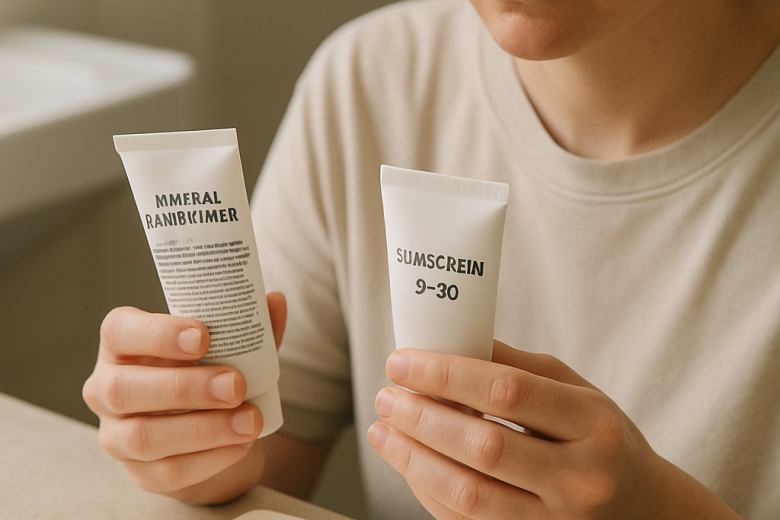
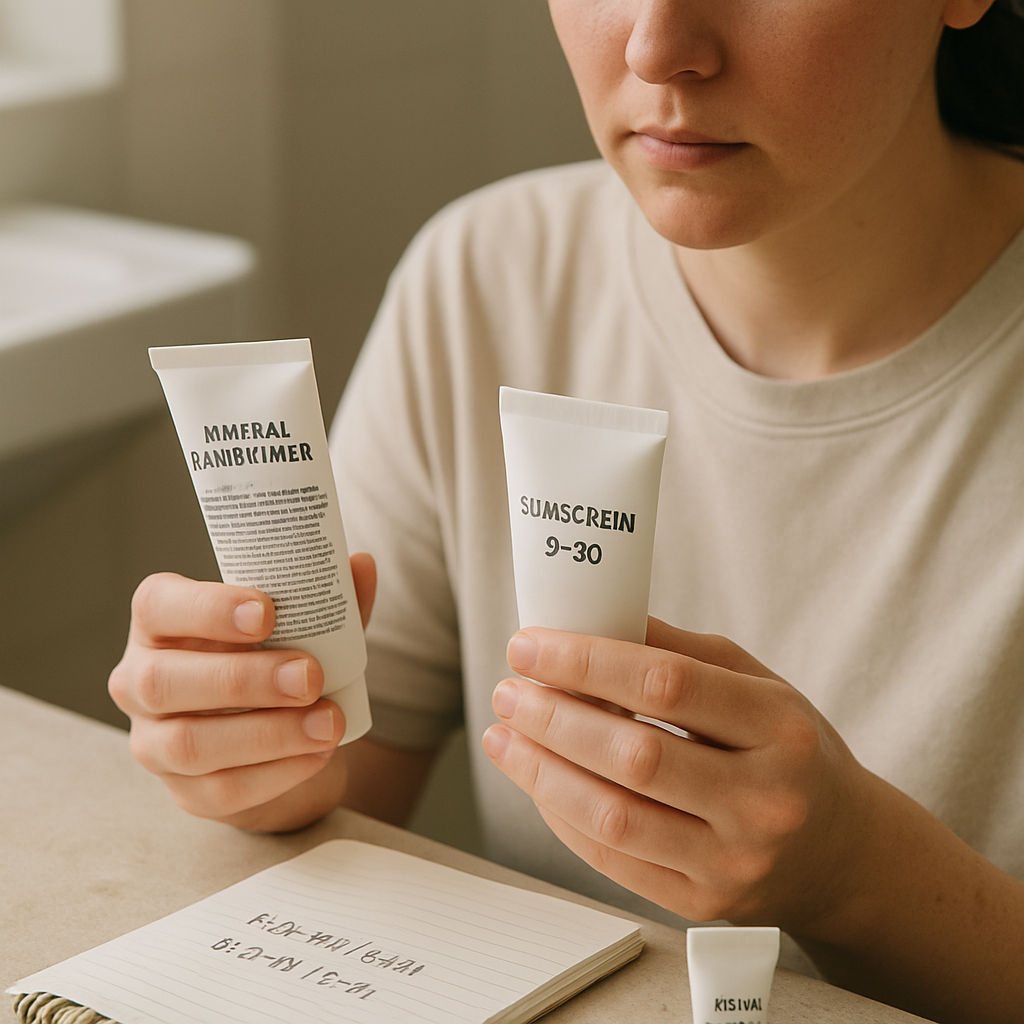
Imagine two options. Product A is an expensive mineral sunscreen with a thick texture and noticeable cast. Product B is a less expensive, fragrance-free, broad-spectrum SPF 30 formula that feels comfortable. If both suit your needs and you apply Product B generously, it may be the better practical choice for sunscreen for sensitive skin.
Now suppose the cheaper product stings around your eyes, but the mineral one doesn’t. The choice changes. The right sunscreen for sensitive skin balances protection and comfort for the person using it. It isn’t necessarily the product with the best-sounding label or the lowest price.
For a day spent outdoors, water resistance and ease of reapplication matter more. For a short commute, daily comfort may determine which sunscreen you actually use. Either way, sunscreen is only one part of sun protection. Shade, protective clothing and avoiding direct sun during its strongest hours can help without requiring a more expensive formula.
Conclusion
Choosing sunscreen for sensitive skin comes down to protection, comfort and cost. Start with broad-spectrum SPF 30 or higher, check for water resistance when needed, and pay attention to fragrance or other ingredients if you know your triggers. Mineral formulas are one option, not a universal solution.
The best-value sunscreen isn’t necessarily the cheapest or the most luxurious. It’s an affordable formula your skin tolerates and that you’ll apply in adequate amounts, consistently. That may be a quieter win than a clever label, but it’s a more useful one.